
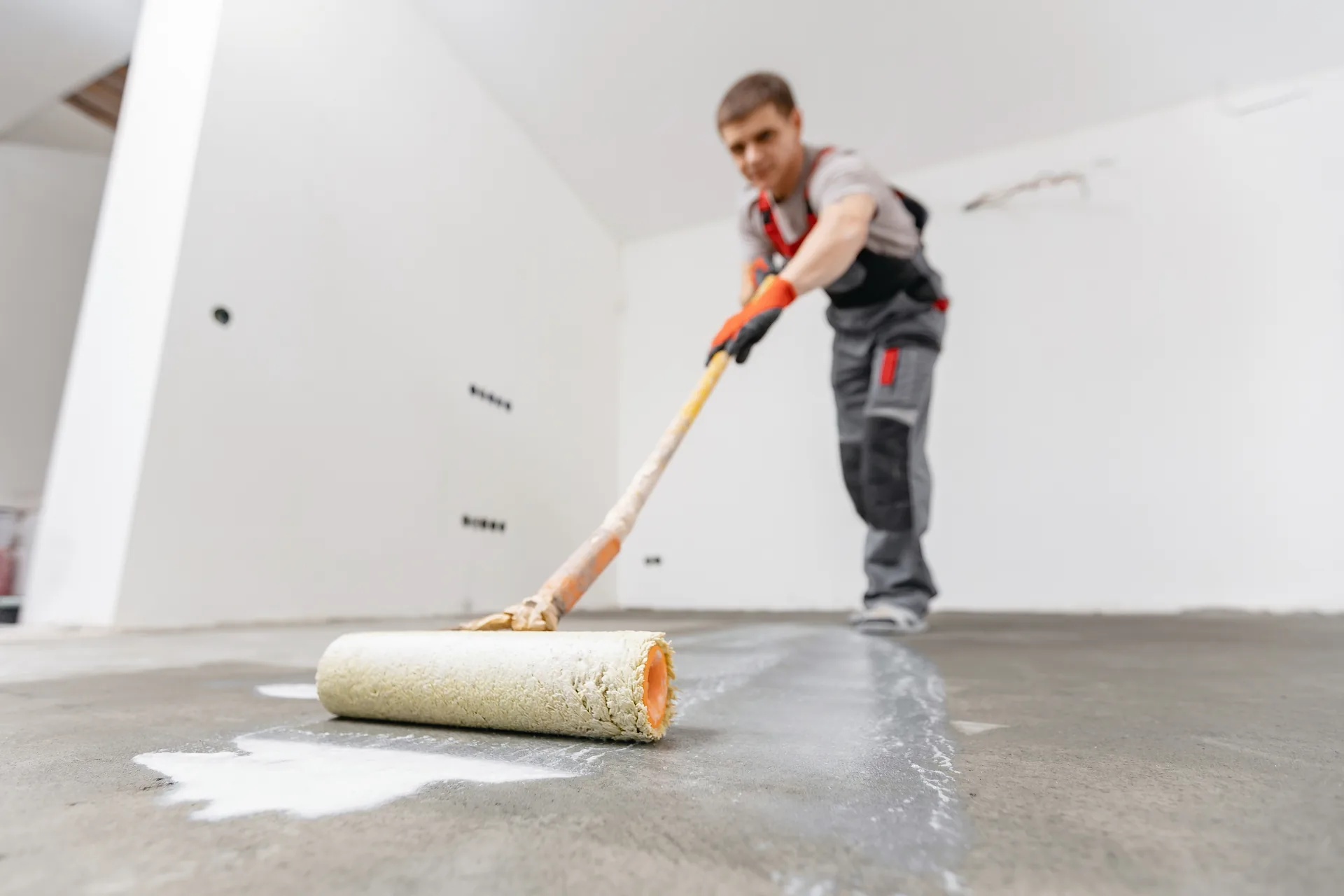
CALCULATOR
Primer coverage calculator
Estimate litres required for Gripset GP, Gripset E60, and RLA primers across porous and non-porous substrates.
Primer is the cheapest insurance on a job – and the most-skipped product step. Coverage varies by substrate porosity: porous concrete drinks 0.15 L/m²; sealed terrazzo only needs 0.10 L/m². The calculator below sizes primer for your substrate type and recommends the right pack.
Why never skip the primer
Tile adhesive, waterproofing membrane and self-leveller all need a clean, sealed bonding surface to perform to their TDS spec. Without primer, the substrate either drinks the mix water out of the product (for cementitious systems) or fails to provide adhesion at all (for water-based polymers).
The bond-failure callbacks we see at the 12-month mark are dominated by un-primed substrates. Fixing them means ripping out the finished work, mechanically prepping the substrate, priming, and reinstalling – at the contractor’s cost. A 15 L pail of GP primer costs less than one hour of remediation.
Typical coverage rates we use
| Primer | Porous | Non-porous | Pack sizes |
|---|---|---|---|
| Gripset GP (general purpose) | 0.15 L/m² | 0.10 L/m² | 4 L, 15 L |
| Gripset E60 (water-based epoxy) | 0.20 L/m² | 0.15 L/m² | 4 L kit |
| RLA Universal Primer | 0.15 L/m² | 0.10 L/m² | 4 L, 15 L |
Picking the right primer for the substrate
Porous substrates
Sand-cement screed, AAC block, fibre-cement sheet, sand-finish concrete, MDF, particleboard. Use a general-purpose porous primer (Gripset GP or RLA Universal). One coat for most installs; two coats on very absorbent substrates.
Non-porous substrates
Power-floated concrete, terrazzo, existing ceramic tile, sealed marble, polished concrete. Use a water-based epoxy primer (Gripset E60). The chemical bond is critical because there’s no porosity for mechanical key.
Primers we stock for the Hunter
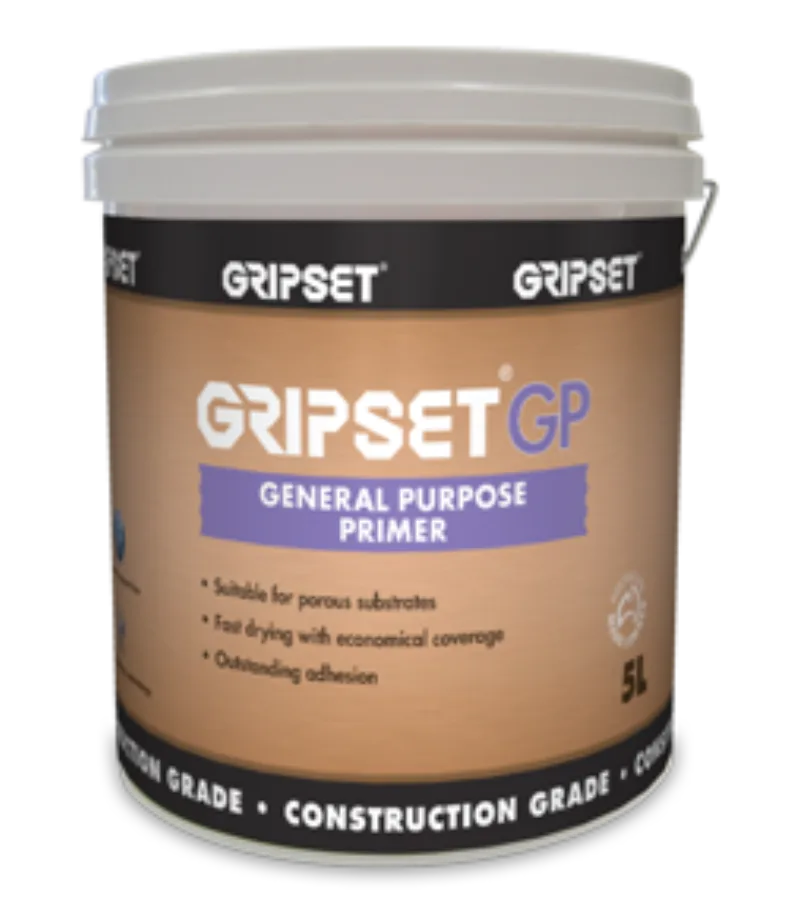
Gripset GP
Water-based general purpose primer. For porous substrates under tile, waterproofing, or self-levelling. 4 L & 15 L pails.
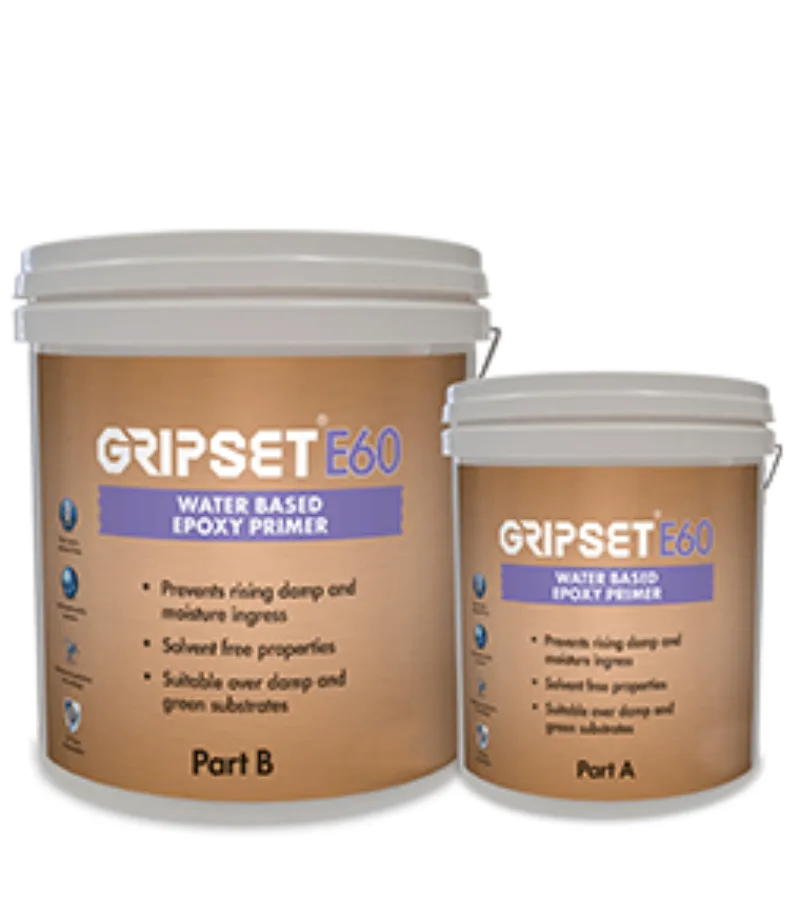
Gripset E60
Water-based epoxy primer for non-porous substrates: power-floated concrete, terrazzo, tile-over-tile. Two-part kit.
Frequently asked questions
Can I dilute primer to make it go further?
Only if the TDS allows it, and only at the dilution ratio specified. Some porous primers are designed to be diluted 1:3 for first-coat sealing, then applied neat for second coat. Diluting outside the TDS spec produces an under-sealed substrate that fails downstream.
How long after priming before I can tile or waterproof?
Touch-dry typically 30–60 minutes; ready for overcoating usually 2–4 hours depending on humidity. For non-porous epoxy primers, the curing window is more critical – overcoat too early and the bond is compromised; overcoat too late and the primer is no longer tacky.
What if the primer beads up on the substrate?
Stop and prep again. Beading means there’s surface contamination – residual sealer, oil, wax, or release agent. Grind the surface to expose clean substrate, vacuum thoroughly, then re-prime. Bond will fail otherwise.
Can I prime AAC blockwork before tiling?
Yes – and you should. AAC is highly porous and will drink the mix water out of any cementitious adhesive applied directly. Use a porous primer at 0.15–0.20 L/m² for the first coat (AAC drinks it heavily) and a second coat at standard rate.
Ready to set up your trade account?
Apply today for trade pricing, technical support, and dedicated rep service.