
CALCULATOR
Tile adhesive coverage calculator
Estimate how many bags of tile adhesive you need by area, tile size, and trowel notch – across RLA Mastik, UniLite S1, and Add Flextra. Built for Hunter-region tilers.
Tile adhesive coverage depends on three things: the area you’re tiling, the size of the tile, and the notch on the trowel. Pick a tile that’s too big for the notch and you’ll get voids under the tile that fail under foot traffic. Pick a notch that’s too big and you’ll waste adhesive – and squeeze it up between the grout joints. The calculator below estimates kilograms required and the right pack size to order, by product.
How tile adhesive coverage is calculated
Coverage is consumption per square metre, expressed in kg/m² for cementitious tile adhesives. It varies with notch size because a deeper notch leaves more adhesive under the tile after the tile is bedded. As a working rule:
- 6 mm notch – mosaics and tiles up to ~200 mm. Typical consumption 1.2–1.9 kg/m².
- 10 mm notch – mid-format up to ~400 mm. Typical consumption 1.8–2.9 kg/m².
- 12 mm notch – large format above 400 mm, or where the substrate is uneven. Typical consumption 2.4–3.7 kg/m².
For very large format (above 600 mm) or for back-buttering installations, plan for 5–7 kg/m² and round up. Coverage figures on TDS sheets assume a flat substrate and a level tile – both rarely true on real jobs.
Typical coverage rates we use
| Adhesive | 6 mm notch | 10 mm notch | 12 mm notch | Pack sizes |
|---|---|---|---|---|
| RLA UniLite S1 | 1.5 kg/m² | 2.3 kg/m² | 2.8 kg/m² | 12.5 kg |
| RLA Mastik | 1.9 kg/m² | 2.9 kg/m² | 3.7 kg/m² | 20 kg |
| RLA Add Flextra | 1.2 kg/m² | 1.8 kg/m² | 2.4 kg/m² | 20 kg |
What changes actual coverage
Substrate flatness
An uneven substrate doesn’t just waste adhesive – it forces you up a notch size to bridge the dips, doubling consumption in patches. If your substrate is out by more than ±3 mm under a 2 m straight edge, level it first with a self-leveller instead of burying the variance under thicker adhesive.
Tile back ridges
Porcelain tiles with deep back ridges consume noticeably more adhesive than tiles with shallow ridges. If you can fit a 6 mm trowel comb between the back ridges, you’ll burn through 10–20% more product than the TDS suggests.
Application technique
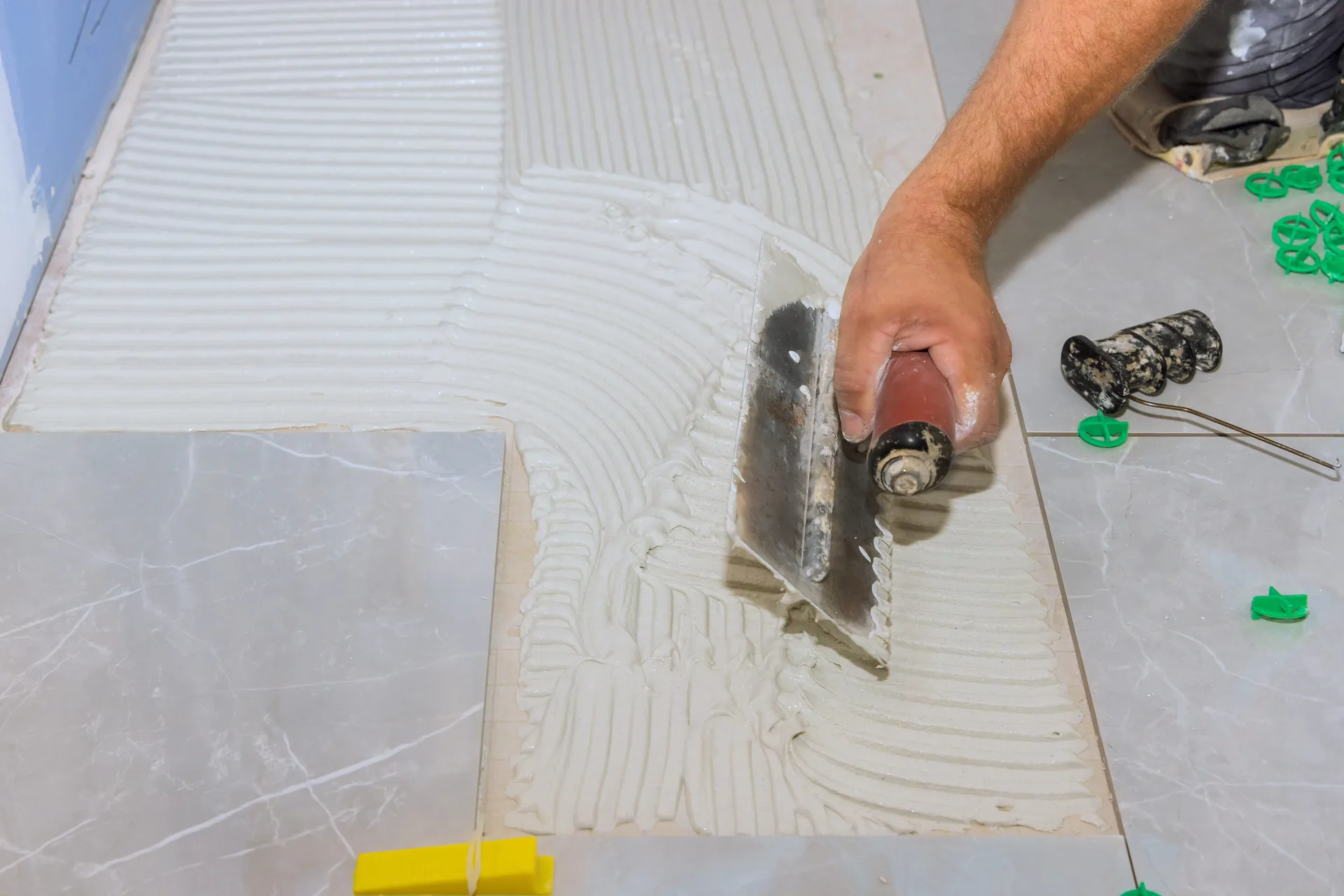
Combing the adhesive in one direction (rather than swirling) gives the most consistent bed. Swirl-combing looks faster but creates voids and uses more product when the tile is bedded down.
Back-buttering
For tiles over 600 mm and for wet-area floors, back-butter as well as comb the substrate. That roughly doubles consumption – but it’s the difference between a tile that lasts 30 years and one that drums in five.
Common ordering mistakes
The most common ordering mistake we see at the yard is ordering exactly what the calculator says – without rounding up for site reality. Two bags spare is far cheaper than running out at 11 am on a Friday. The second-most-common mistake is matching the wrong adhesive to the wrong tile: large-format porcelain on UniLite S1 sized for 6 mm notch is a callback waiting to happen.
Our tile adhesive range walks through which product matches which tile size and substrate.
Adhesives we stock for the Hunter
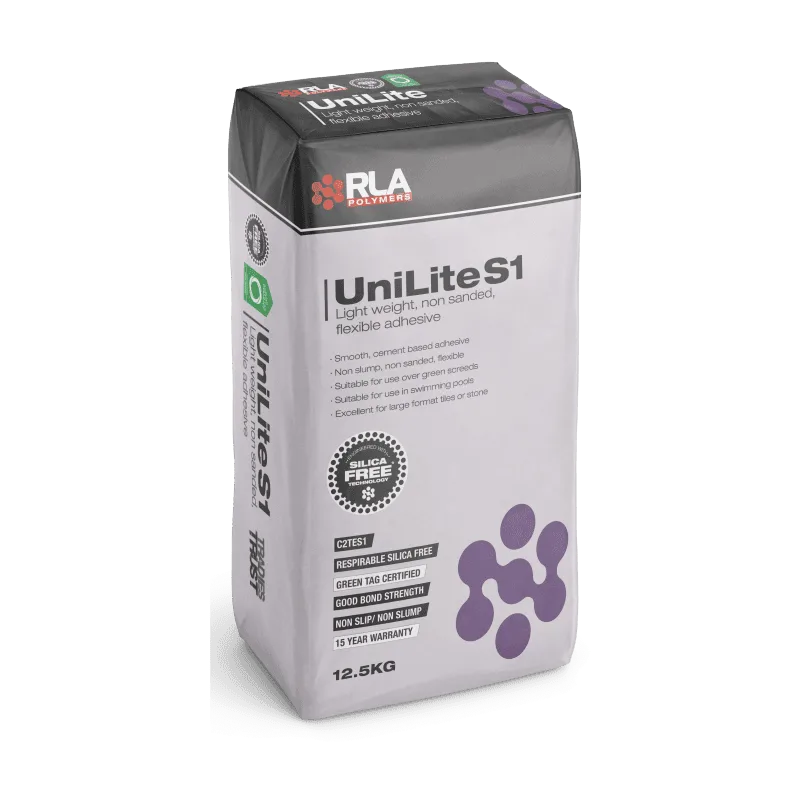
RLA UniLite S1
Lightweight non-sanded S1. Versatile across small, mid-format and large-format ceramic. 12.5 kg bag – 5–6 m² coverage at 10 mm notch.
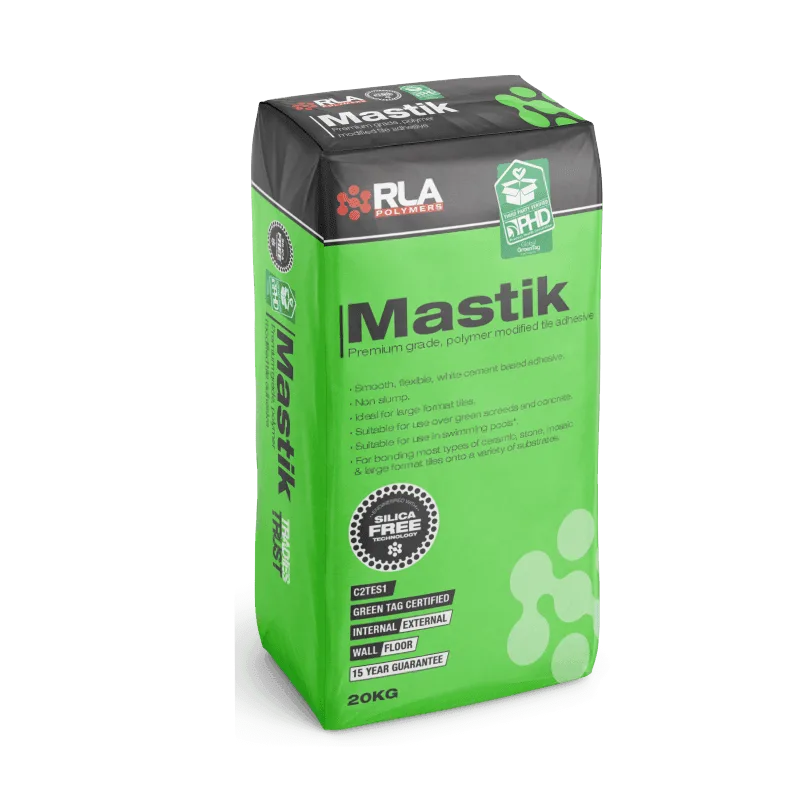
RLA Mastik
Premium polymer-modified C2TE. Built for large-format porcelain. 20 kg bag – 7 m² coverage at 10 mm notch.
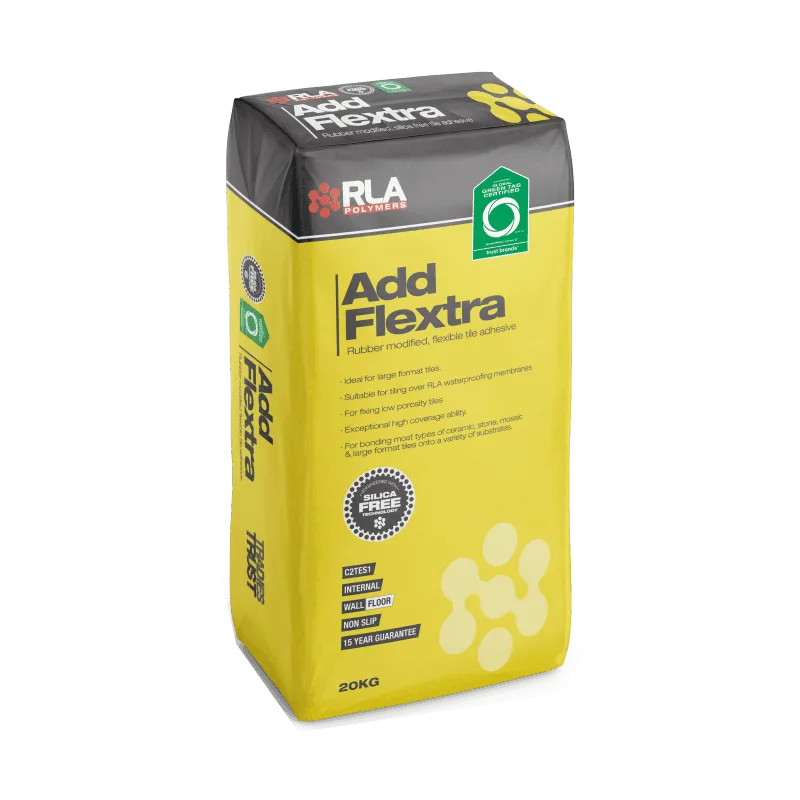
RLA Add Flextra
Rubber-modified for substrate movement – balconies, second-storey wet areas, podium decks. 20 kg bag – exceptional yield (10–12 m² coverage at 10 mm notch).
Frequently asked questions
Is the tile adhesive calculator accurate for porcelain?
Yes for mid-format porcelain. For large-format porcelain (over 600 mm) or for porcelain with deep back ridges, add 15–20% to the calculator result and budget for back-buttering as well as substrate combing.
How much spare adhesive should I order?
Round the calculator result up to the next whole bag and add one. On jobs over 30 m² we recommend rounding up and adding two – the cost of a spare bag is a fraction of the cost of stopping the job to source one mid-week.
Can I use UniLite S1 for large-format porcelain?
UniLite S1 is rated across small to large format ceramic. For dense large-format porcelain we usually recommend stepping up to Mastik or Add Flextra for the polymer modification – but UniLite S1 will work for less-demanding large-format installations on flat substrates.
Do you deliver tile adhesive across the Hunter?
Yes – Newcastle, Lake Macquarie, Maitland, Port Stephens, Cessnock and the surrounding postcodes. Same-day pickup from the yard for trade-account holders; scheduled delivery typically next-day. See delivery details.
Ready to set up your trade account?
Apply today for trade pricing, technical support, and dedicated rep service.